
 Ancient Egypt Home
Pharaohs
Egyptian Gods
Egyptian Pyramids
Hieroglyphics
Temples
Life in Ancient Egypt
Maps of Ancient Egypt
History of Egypt
The Queens of Egypt
Mummies
Religion
Cities and Regions
Ancient Egypt Facts
Ancient Egypt For Kids
Ancient Egypt Home
Pharaohs
Egyptian Gods
Egyptian Pyramids
Hieroglyphics
Temples
Life in Ancient Egypt
Maps of Ancient Egypt
History of Egypt
The Queens of Egypt
Mummies
Religion
Cities and Regions
Ancient Egypt Facts
Ancient Egypt For Kids
Margaret Murray: The Egyptologist Who Opened the Door for Women in Archaeology
On 13 July 1863, Margaret Murray was born in Calcutta. She was a girl who, although no one could have foreseen it at the time, would decades later become Britain’s first female lecturer in archaeology.
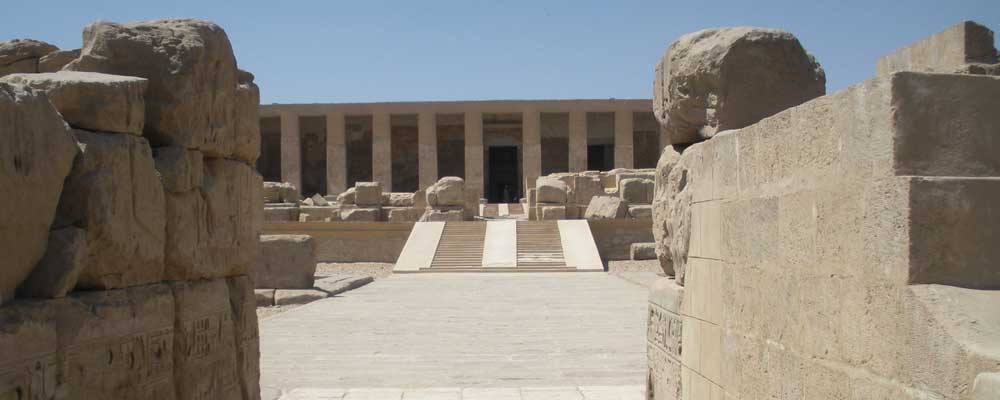
Abydos Temple of Seti I
© Heidi Kontkanen
At a time when Egyptology was almost entirely dominated by men, Murray managed to establish herself alongside leading figures such as Flinders Petrie and paved the way for generations of female archaeologists after her. That is reason enough to place this remarkable scholar in the spotlight during the month of her birth.
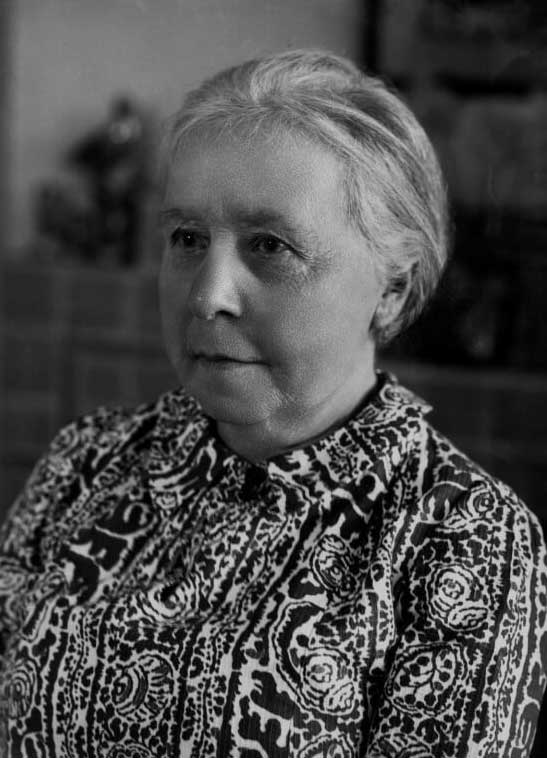
© Portret of Margaret Murray
A Childhood Between Two Worlds
Margaret Murray was born to a British businessman and a missionary in what was then British India. Her father, James Murray, managed the paper mills of Serampore and served several times as president of the Calcutta Chamber of Commerce. Her mother, also named Margaret, had travelled to India to provide Christian education to Indian women.
Murray’s childhood was divided between India, Great Britain and Germany. Before she ever considered an academic career, she worked as a nurse during a cholera outbreak in Calcutta and later as a social worker in England. Only in her thirties did she take an entirely different path: that of Egyptology, alongside Flinders Petrie.
Alongside Flinders Petrie
In 1894, Murray enrolled at University College London, or UCL. There, she became fascinated by the emerging discipline of Egyptology. She joined Sir Flinders Petrie, one of the world’s leading Egyptologists at the time.
He quickly recognised her talent. In 1895, Murray published her first academic article, and in 1898 she began teaching her first introductory classes in the Egyptian language.
In 1899, she reached a milestone whose significance extended far beyond Egyptology: Murray was appointed junior lecturer, making her the first female lecturer in archaeology in the United Kingdom.
She would remain associated with UCL until 1935 and teach hundreds of students, including a remarkable number of women whose careers she helped to launch.
Excavations in Egypt
Murray did not remain behind her desk. Between 1902 and 1904, she took part in Petrie’s excavations at Abydos, where she contributed to the discovery of the famous Osireion, an underground temple complex dedicated to Osiris.
A year later, she led research at the burial grounds of Saqqara. Both projects established her reputation as a serious field archaeologist at a time when women were still a rarity on archaeological excavations.
Later in her career, she broadened her field of work even further, taking part in excavations in Malta, Menorca, Petra and southern Palestine. Few of her contemporaries, male or female, could claim such broad international experience.
A Woman Who Broke Boundaries
At the beginning of the twentieth century, women in science had very limited access to formal positions, let alone leadership roles. Murray constantly had to prove herself in a discipline that was almost entirely controlled by men.
She was also active in the women’s suffrage movement and devoted her entire life to improving the position of women in science. Her perseverance paid off: she trained dozens of female Egyptologists and archaeologists, some of whom went on to become respected figures in their own right.
Her legacy is therefore at least as visible in the careers she helped to make possible as it is in her own publications.
One Hundred Years and an Impressive Legacy
Murray died on 13 November 1963, exactly one hundred years and several months after her birth, shortly after the publication of her autobiography, My First Hundred Years.
She lived long enough to celebrate her hundredth birthday and to look back on a career that permanently changed both Egyptology and archaeology as academic disciplines.
Today, more than a century after her first excavations at Abydos, Margaret Murray is increasingly recognised as one of the pioneers of modern Egyptology and as a trailblazer who demonstrated that scientific discoveries are not reserved for one gender.
Every time a female archaeologist leads an excavation today, she stands, in some small way, on the shoulders of Margaret Murray.