
 Ancient Egypt Home
Pharaohs
Egyptian Gods
Egyptian Pyramids
Hieroglyphics
Temples
Life in Ancient Egypt
Maps of Ancient Egypt
History of Egypt
The Queens of Egypt
Mummies
Religion
Cities and Regions
Ancient Egypt Facts
Ancient Egypt For Kids
Ancient Egypt Home
Pharaohs
Egyptian Gods
Egyptian Pyramids
Hieroglyphics
Temples
Life in Ancient Egypt
Maps of Ancient Egypt
History of Egypt
The Queens of Egypt
Mummies
Religion
Cities and Regions
Ancient Egypt Facts
Ancient Egypt For Kids
Tutankhamun
Period:
New Kingdom / 18th Dynasty
Lifespan:
1341 BC - 1323 BC
Reign:
1332 BC - 1323 BC
Father:
Akhenaten
Mother:
Kiya
Spouse:
Ankhesenamun
Children:
Two stillborn daughters
Burial:
KV62
Tutankhamun | King Tut
Since his tomb was first discovered in 1922, the life of King Tut has continued to mystify and enthrall both historians and amateur sleuths alike. The young age of the ruler, his mysterious death and the curse that continues to be associated with ancient Egypt and King Tut have only increased the world's fascination with King Tut's life history. Thanks to the preservation of his tomb and the treasures inside Tutankhamun is the most famous pharaoh today.
The mystery surrounding the young King Tut transformed him into the most famous of all Egyptian pharaohs. However, he was not considered a powerful or important leader during and after his reign. How did a young boy who was pharaoh for only nine years become the icon of Egyptian royalty?
The Search for Tutankhamun
Archaeologists in the 20th century uncovered many tombs, coffins and funerary items in the Valley of the Kings at Thebes. The area was a popular research area for historians, scientists and wealthy investors.
Historical texts left no records of the burial of King Tutankhamun. Archaeologists found several clues in the tombs of others that suggested that Tut was buried in the Valley. Between 1905 and 1908, Theodore Davis and Edward Aryton found three antiquities showing or referring to Tutankhamun's location in the Valley of the Kings.
These few clues led Howard Carter on a search for the mysterious pharaoh. Ancient texts indicated that during his reign Tutankhamun had tried to return Egypt to a previous religious status. Carter saw this as an additional sign that Tut’s tomb would be found within the Valley of the Kings.
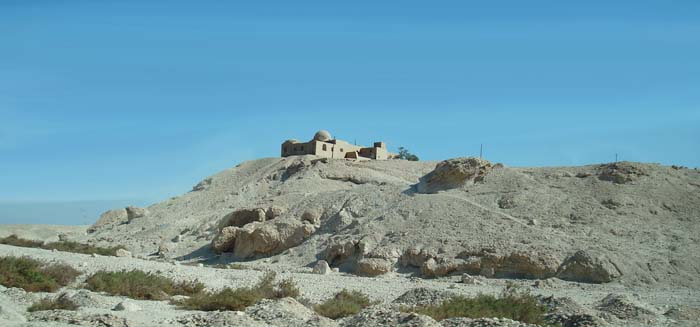
© radiowood - The house of Howard Carter, outside the Valley of the Kings
Carter’s sponsor, Lord Carnarvon of England, invested in the search for the missing pharaoh. After six years of finding nothing, Carter would make the most significant archaeological find of all time.
The Discovery
In November 1922, Howard Carter was facing his last chance for finding the tomb of King Tutankhamun. Four days into the final expedition, he positioned his workers at the base of the tomb of Ramesses VI. Workers exposed 16 steps leading to a resealed doorway. Carter had no doubt whose tomb he was entering. King Tut's name appeared everywhere.
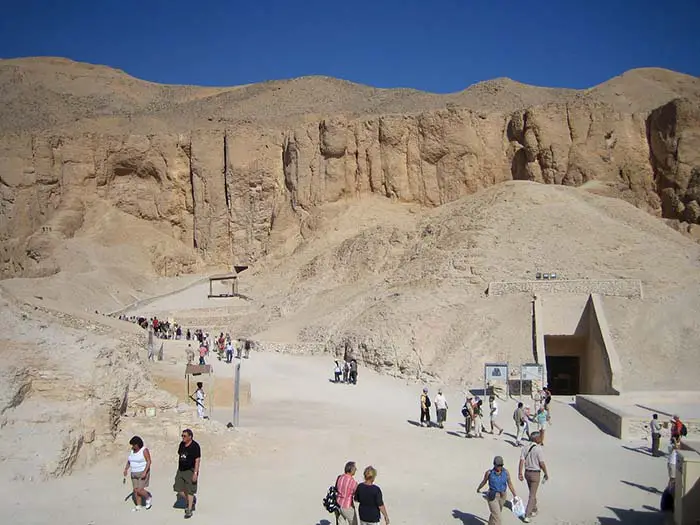
© Tona & Yo - The Entrance to the Tomb of Tutankhamun
The presence of a reseal meant that the tomb robbers had raided the tomb, but during ancient times. The interior revealed that the tomb had been entered and straightened, then resealed by Egyptian authorities. It appeared that the tomb had been untouched for thousands of years.
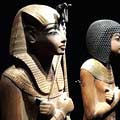
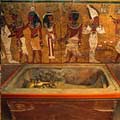
After making their way through a never seen before amount of treasures, Carter and his team entered the antechamber. Two life-size wooden statues of King Tutankhamun stood guarding the burial chamber. Inside the chamber, they found the first intact royal burial to ever be uncovered by modern Egyptologists.
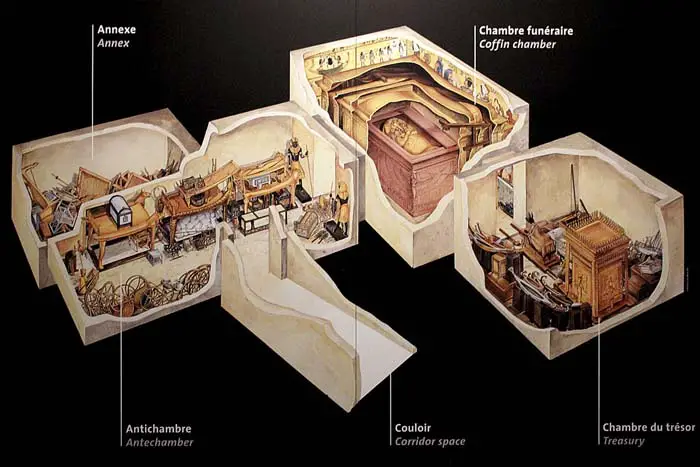
© Claude Valette - The Chambers of Tutankhamun's Tomb
A Royal Mummy
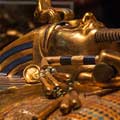
Like a nesting doll, the mummy of Nebkheperure Tutankhamun lay within four gilded funerary shrines. These shrines protected a stone sarcophagus. Inside the sarcophagus were three coffins. The two outside ones were gilded, while the inner one was made of gold. Inside these layers, Tut’s mummy lay covered with jewelry, amulets and a stunning death mask made of gold.
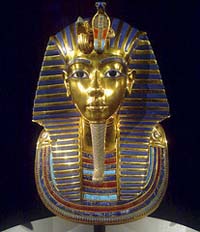
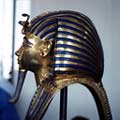
Weighing a little over 10kg, the death mask portrays Tutankhamun as a god. He holds the crook and flail, symbols of the rule over Egypt, the nemes headdress, and the beard that associates the pharaoh with Osiris, thus highlighting the status of a deity.The mask is adorned with turquise and lapis lazuli, depictions of gods and goddesses, and a section from the Book of the Dead which the ancient Egyptian used as a map in their journey into the afterlife.
Despite the huge impact the discovery would have in uncovering much about the life of royalty in ancient Egypt, King Tutankhamun’s tomb brought up many questions about his life, family tree and death. The answers to these questions remained hidden until many years after Carter’s death.
King Tut's Death Mask
Tutankhamun's so-called 'death mask' is the funerary mask he was buried with. It is a massive gold representation of King Tut, resembling other depictions of him archaeologists found in his tomb.
The death mask is highly decorative, with inlays of colored glass, lapis lazuli and other gemstones, including quartz and obsidian for the eyes. The beard is a symbol of the pharaoh status - and a cause of recent trials, after a few museum workers damaged it. Luckily, a German-Egyptian team managed to restore it to its original aspect.
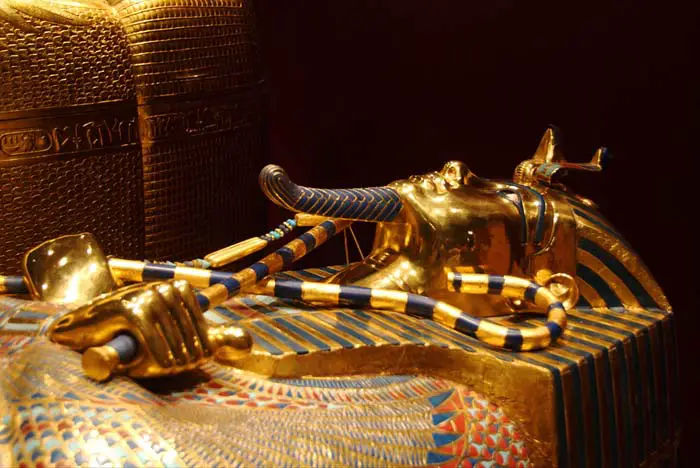
© Kačka a Ondra - Inner coffin of Tutankhamun
Family Members
Tutankhamun was born around 1343 BC. At this time, Egypt was already almost 2,000 years old. Egypt was in what historians call an “obscure” state. Researchers refer to this period at the end of the 18th dynasty as the post-Amarna period. Early in the research of Tut’s life, historians believed that he was of the Akhenaten family. A single reference at the great Aten temple at Tell el-Amarna told historians that Tutankhamun was most likely the son of Akhenaten and one of his many wives.
Modern science has reportedly substantiated this claim. Scientists have tested the supposed body of the Pharaoh Akhenaten and compared it to Tutankhamun. DNA evidence supports Akhenaten is the father of Tutankhamun. In addition, the mummy of one of Akhenaten’s minor wives, Kiya, was linked through DNA as Tut’s mother.
Further DNA testing reveals that Kiya, also known as the “Younger Lady,” was the daughter of Amenhotep III and Tiye. This makes her a sister of Akhenaten.
Inside of Tut’s tomb, scientists identified a lock of hair as belonging to his grandmother, Queen Tiye, the chief wife of Amenhotep III. Two mummified fetuses were also found within the tomb. DNA indicates that they were Tutankhamun’s children.
Tutankhamun married his half-sister Ankhesenamun as a child. One of the earliest found antiquities pictures Tutankhamun giving his wife one of is enemies. Letters written by Ankhesenamun after Tut’s death say “I have no son,” indicating that Tut and his wife had no living children to carry on his legacy.
Click here to discover more about King Tut's Family
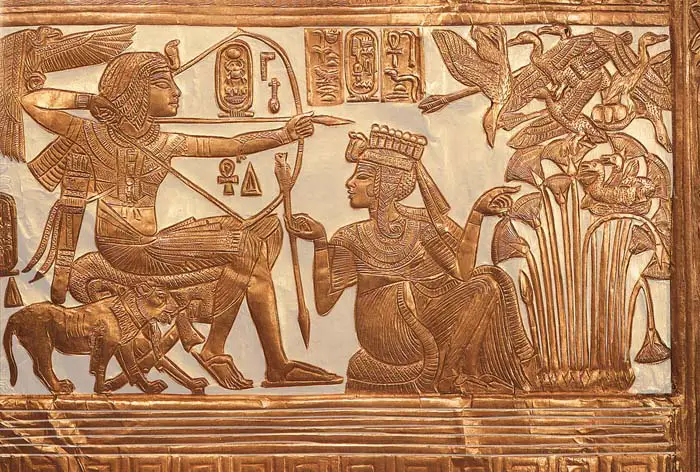
© Asaf Braverman - Depiction of Tutankhamun and Ankhesenamun
Reign of Tutankhamun
Tutankhamun actually began his reign as Tutankhaten. He grew up in the royal harem, marrying his sister at an early age. At this point Ankhesenamun was known as Ankhesenpaaten. At the age of nine he was crowned pharaoh in Memphis. He would rule between 1332 and 1323 BC.
The change in the names of the young pharaoh and his spouse are a result of the decision to return Egypt to an older religious practice which worship Amun instead of Aten. This reconciled the young couple with those who represented the former order of worship. In the second year of Tut’s rule, he moved the capital of Egypt from Akhenaten to Thebes and reduced the god Aten to a rarely mentioned god.
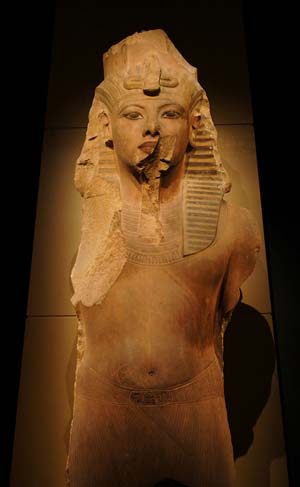
© Tjflex2 - Tutankhamun Statue at Thebes
Tutankhamun died young, in only the ninth year of his rule. Estimates place him as 18 or 19 years old at the time of his death.
Because Tut was just a child and ruled for such a short time, he left little impact on Egypt. He was under the protection of three men: the divine father Ay, the general Horemheb and the treasurer Maya. These men most likely made the majority of the decisions and influenced the pharaoh’s policies.
The majority of the work completed on temples and shrines during the reign of Tutankhamun remained unfinished. Later pharaohs would complete work and replace Tut’s name with their own. For example, the Luxor temple at Thebes bears work accomplished during Tutankhamun’s rule. After Tut’s death, Horemheb’s name replaced Tut’s name on the temple, although the original version is still clear in some areas.

© Tjflex2 - Plaque at Thebes, depicting King Tut
A Mysterious Death
What Killed Tutankhamun?
When King Tut’s mummy was first found, historians discovered trauma to the body. His mysterious death quickly led to many theories involving intrigue and murder among the Egyptian royals. How did he die? Was he murdered? Who murdered him?
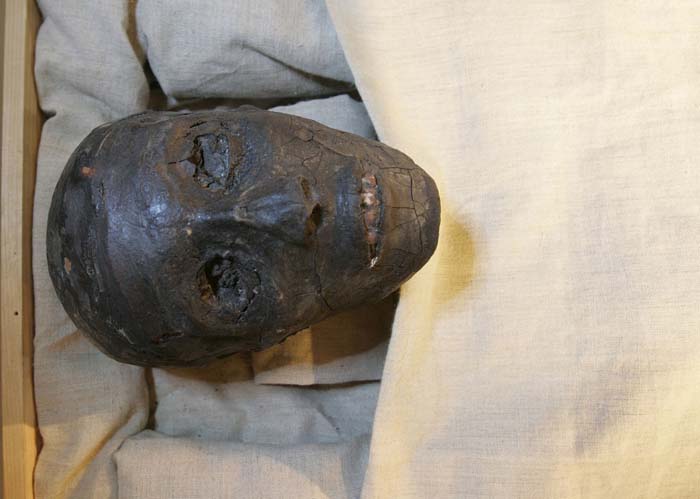
© Nasser Nouri - The head of Tutankhamun's Mummy
The first examinations by Howard Carter and a team led by Dr. Douglas Derry could not make a certain determination on the cause of death. The majority of Egyptologists believed that his death resulted from a fall from a chariot or other similar accident.
Recently, an international research team under the leadership of Dr. Chris Naunton discovered injuries on one side of Tutankhamun's body, which led to the conclusion that King Tut was involved in a chariot crash, but further investigation concluded that this was highly unlikely.
The search for a medical cause of death has revealed much about the life of Tutankhamun. He probably never enjoyed good health during his life. Scans reveal he suffered from a bone disorder combined with a club foot. Researchers believe Tut needed canes to walk. This explains the 139 ebony, ivory, silver and gold canes found within his tomb.
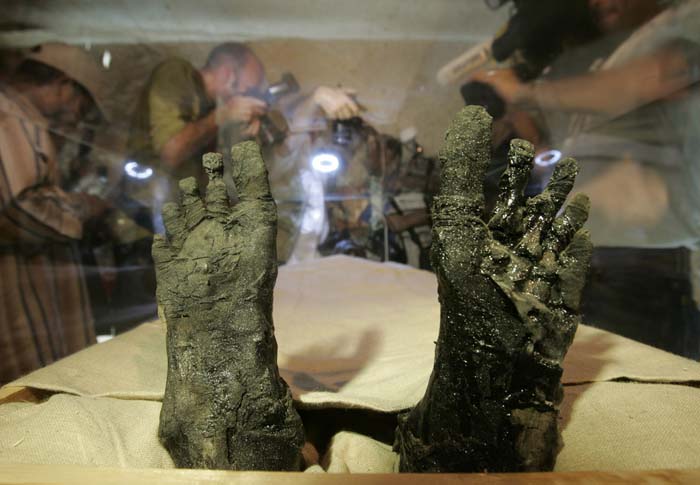
© Nasser Nouri - The Feet of Tutankhamun's Mummy
Despite being a royal god-king of Egypt, he also suffered the same fate as many of his subjects: malaria. His body displays evidence of having endured several malarial infections during his short life. One of these infections, malaria tropica, is one of the most common forms of the disease.
King Tut's Funeral
The funeral of Tutankhamun, although similar to any funeral in ancient Egypt, involved much more lavish details due to his status as pharaoh of Egypt. Scholars estimate it to have taken place some time between February and April.
The embalming process was the longest, believed to last several weeks. Embalmers removed the internal organs (buried in canopic jars along with the deceased), then dried the body with natron. They then applied a treatment of unguents, herbs and resin - a wider range of ointments than the lower classes would have been able to afford. The body of the young pharaoh was then covered in fine linen, not only to preserve his body, but also to shape it for the afterlife - the body that would live forever.
Archaeologists found remains of the embalming process in the vicinity of Tutankhamun's tomb. This indicates that, perhaps, ancient Egyptians believed they kept a trace of the buried person.
Vessels for water, although some small and frail, crafted with a symbolic purpose, are evidence for funeral rites of purification. The tomb also sheltered a variety of dishes, bowls and plates, that held food and drink offerings. These were buried with the pharaoh, so he would use them in the afterlife.
King Tut's funeral included extravagant adornments of his tomb: mural paintings, chariots and everyday items for the afterlife, and gorgeous gold jewelry. There are also extremely well preserved remains of plants used for decorative purposes - olive branches, picris, rennet and blue cornflowers.
Treasures of Ancient Egypt
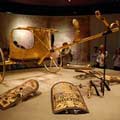
Howard Carter’s careful inventory of King’s Tut tomb combined with pictures taken by Harry Burton of New York’s Metropolitan Museum to reveal the amazing treasures buried with the young pharaoh. Ten years of work cataloging the massive number of items revealed that Tut's burial happened quickly in chambers smaller than usual for the size of his treasure.
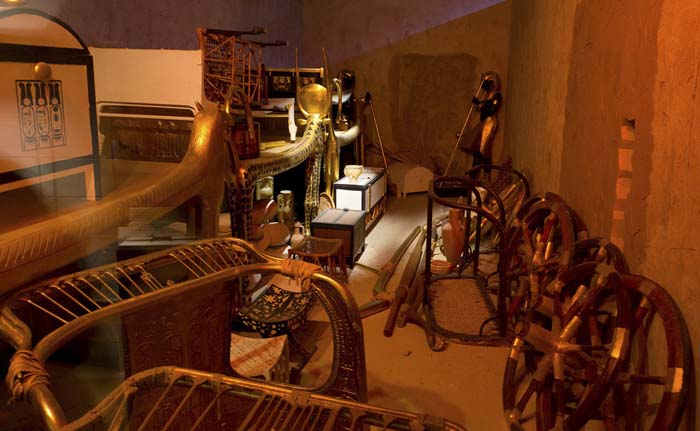
© Photo Dean - Reproduction of Tutankhamun's Tomb Contents
King Tutankhamun’s tomb was only 12.07 feet high, 25.78 feet wide and 101.01 feet long. Inside were over 3,000 separate items, most of pure gold. The antechamber was in complete disarray. Golden furniture and dismantled chariots lay piled into the area. The annex contained more furniture and jars of oil, ointments, food and wine.
The burial chamber contained the golden layers of Tut’s coffin and the famous death mask. A treasury room, guarded by a statue of the god Anubis, contained jeweled chests, extravagant jewelry, model boats and a golden shrine containing the Canopic jars holding King Tut’s internal organs.
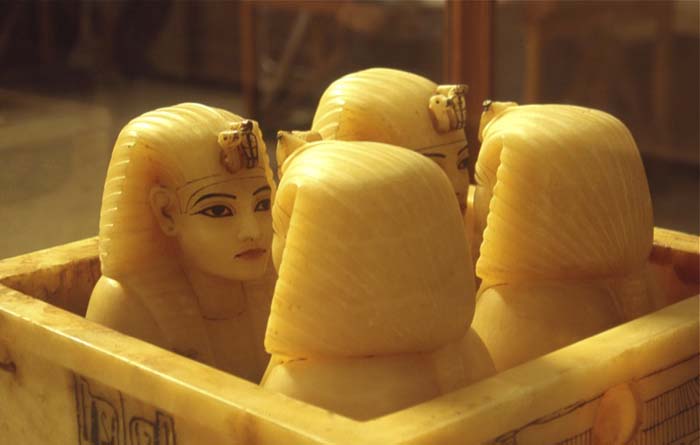
© Charlie Phillips - Canopic Jars of Tutankhamun
Historians believe that Egyptian priests buried Tutankhamun within his tomb before the paint had time to dry on the walls. Microbial growth found on the walls of the tomb indicates to scientists that the paint was still wet when the tomb was sealed off from the world. Dark spots located on the tomb’s artwork are a result of the microbial growth and are now considered a unique feature.
The small chambers, quick burial and ancient attempts at tomb robbing explain the chaotic conditions found within the tomb. It is most likely that Tut’s replacement, Ay, rushed his burial in order to smoothly take over the rule of Egypt.
The Struggle for the Throne
Despite the allure of a mysterious murder and the possible motives for such a powerful move, historians believe that those around Tutankhamun would not have wanted him to die early. He, along with his wife, were the last of the ruling dynasty. Coming from a family not known for health and longevity, Tut's advisors would have worried about his life. Only through the royal pair were they able to hold power. They most likely would have protected the couple, trying to keep them from harm.
Tut's wife, Ankhesenamun, was in a precarious position after his death. She was the last living member of Akhenaten’s family and left alone as the ruler of Egypt. She was young and surrounded by very ambitious older men. Letters show that she tried to save her husband’s legacy and her place on the throne by contacting the King of the Hittites. She asked him to send her a husband as protection. Otherwise, she indicates she will be forced to marry a servant. The prince began his journey, but unknown assassins killed him before he arrived.
Ankhesenamun would marry the divine father Ay. He would rule Egypt for four years, only to be succeeded by General Horemheb.
The Curse of King Tutankhamun’s Tomb
The idea of a young, handsome King of Egypt dying a tragic, untimely death at the hands of a murderous fiend combined with a series of events following the discovery of his tomb to create the popular legend of Tut’s cursed tomb. Although the curse has been debunked many times by historians, popular culture has maintained that those who come into contact with Tut’s tomb will die.
The story of the curse began with the death of Howard Carter’s benefactor, Lord Carnarvon, five months after the discovery of the tomb. He died from an infection as a result of a mosquito bite. It is reported that at the exact moment of his death all of the lights in Cairo went out. Other stories say that Lord Carnarvon’s beloved hound dog in England howled and dropped dead at the same time as the Lord’s death.
Historians believe that the source of the curse rumors was bored newsmen covering the excavation of Tut’s tomb in combination with comments by the archaeologist Arthur Weigall. Prior to the discovery of Tut’s tomb, mummies were not considered cursed, but magical and healing.
Quick Facts and FAQ
- When was Tutankhamun born? King Tut was born around 1343 BC.
- When did Tutankhamun rule? He ruled during the post-Amarna period between 1332 and 1323 BC.
- He became king tat the early age of 9.
- How old was Tutankhamun when he died? He died at the young age of 18 or 19 in 1323 BC.
- How did Tutankhamun die? Recent research revealed he died from blood poisoning caused by an open wound on his left thigh. The wound was probably caused by falling of his horse.
- The collection of antiquities found in his tomb makes him the most famous ancient Egyptian pharaoh.
- There are stories of a mysterious curse thought to be responsible for the deaths of almost two dozen people involved with the discovery of his tomb.
Click here for more King Tut Facts and FAQ