
 Ancient Egypt Home
Pharaohs
Egyptian Gods
Egyptian Pyramids
Hieroglyphics
Temples
Life in Ancient Egypt
Maps of Ancient Egypt
History of Egypt
The Queens of Egypt
Mummies
Religion
Cities and Regions
Ancient Egypt Facts
Ancient Egypt For Kids
Ancient Egypt Home
Pharaohs
Egyptian Gods
Egyptian Pyramids
Hieroglyphics
Temples
Life in Ancient Egypt
Maps of Ancient Egypt
History of Egypt
The Queens of Egypt
Mummies
Religion
Cities and Regions
Ancient Egypt Facts
Ancient Egypt For Kids
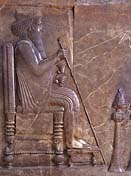
Xerxes I
Lifespan:
519 BC – 465 BC
Reign:
486 BC – 465 BC
Father:
Darius I
Mother:
Atossa
Spouse:
Amestris
Offspring:
Artaxerxes I
Xerxes I | Xerxes the Great
Xerxes I was the king of Persia between 486 and 465 B.C. He was born to King Darius I and Queen Atosa in 520 BC and was given the name Khashayar. Xerxes is the Greek transliteration of the name Khashayar shah, and it means "king of heroes." He was a part of the Achaemenid Dynasty. Xerxes I’s empire stretched from India to Egypt and parts of Europe. It was the largest and most powerful Empire in the area at that time.
Reputation in History
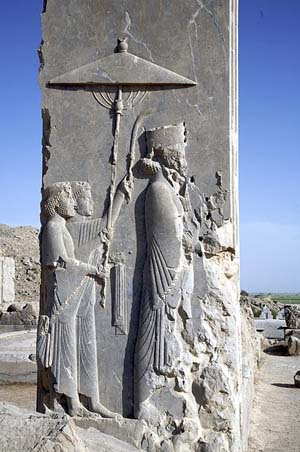
© Nick Taylor - Relief of Xerxes I
Modern and ancient scholars often portray Xerxes I as a tyrant. His rule over ancient Egypt was harsh, disregarding local customs and beliefs left and right. Xerxes decided not to follow the ideas set by his predecessors, the notion that ruling with a fair, light hand was the way to keep many nations under one's rule at once. Given the lack of success, Xerxes went his own way, a way that many labeled as decidedly Persian.
Xerxes I’s bad reputation comes from the fact that many scholars who wrote about him were Greek. He invaded Greece and conquered a large part of the mainland. This made the Greek historians biased against Xerxes I and more likely to view his actions in a bad light. Some modern scholars are of the opinion that Xerxes I was no better or worse than other Persian emperors.
Reign of Xerxes I
Invasion of Greece
Xerxes I invaded Greece in 480 B.C. with a large army of infantry and a navy. He conquered the city-states in Northern and Central Greece because they were too small to stand against him. Athens and Sparta led the defense of Mainland Greece. Xerxes I won the Battle of Thermopylae after being held back by a small army led by Spartan soldiers and sacked Athens.
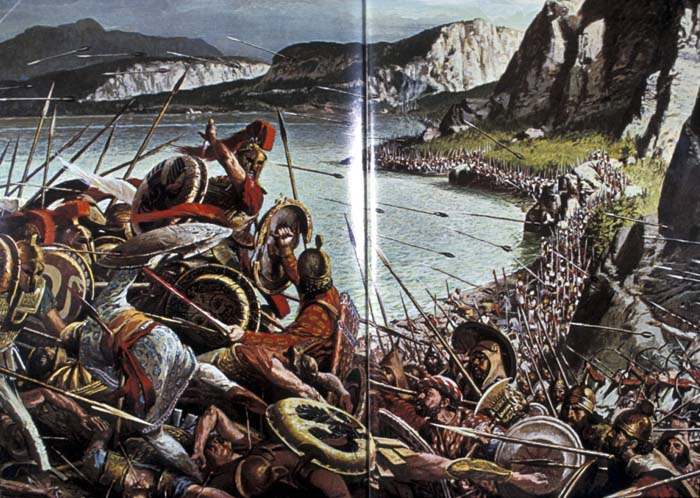
© Σταύρος - Depiction of the Battle of Thermopylae
Then, the Greek navy defeated the Persian navy, including 200 Egyptian Triremes (a warship with three banks of oars), at the Battle of Salamis. After the navy’s defeat, Xerxes I retreated from the Greek mainland, leaving part of his infantry behind. The Greeks defeated this army and beat the navy again near Ionia. After this, Xerxes I did not try to invade the Greek mainland again.
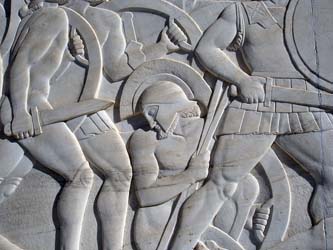
© Ava Babili - Relief at Thermopylae
Other Events
Early in Xerxes I’s reign, Egypt rebelled against Persian rule. He took an army to Egypt to subdue it and left one of his brothers to rule Egypt. Xerxes I’s required all his territories to provide goods or troops for his invasion of Greece. Egypt had to give the navy ropes and provided 200 triremes under the command of King Xerxes's brother.
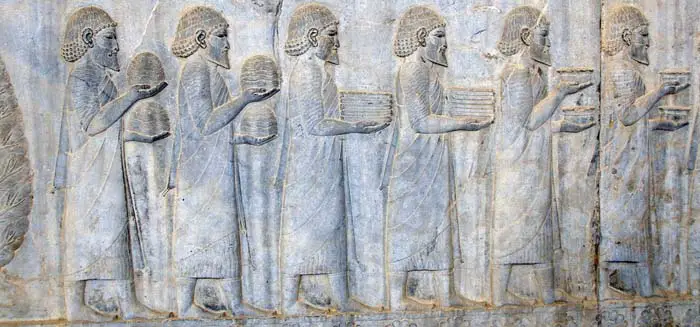
© A.Davey - Tribute Bearers
Babylon also rebelled against Xerxes I early in his reign. He defeated the rebels and then the records of his actions are unclear. Some ancient historians claimed that Xerxes I destroyed Babylon’s temples. Other records say that the temples were active after his reign. The records say that he removed a statue from a temple and melted it down but some records say this statue was not of a deity.
As the years went by and Xerxes himself grew older, his desire to be king of all dwindled, and he settled into comfort in his three capital cities - Susa , Ecbatana , and Persepolis. Troubles across the world had taken a toll on the Achaemenid Empire, as well as the repeated military losses and changes in the way the world around Persia functioned. But as Xerxes let himself enjoy life to the fullest, his empire suffered.
Xerxes I also had to deal with people attempting to usurp his throne. His brother, Masistes, may have been involved with one of these attempts. The records agree that Xerxes I executed Masistes and his family. Yet, they disagree about why this event occurred. Some imply that Xerxes I had an affair with his brother’s daughter and this led to the executions.
Others say that the girl asked Xerxes I for a gift that would have granted her family power equal to the king’s. This was a method of usurping power for her family and angered the queen. She started killing the members of Masistes’ family and Xerxes I executed his brother. Xerxes I and his heir, Darius were killed during a palace plot in 465 B.C.
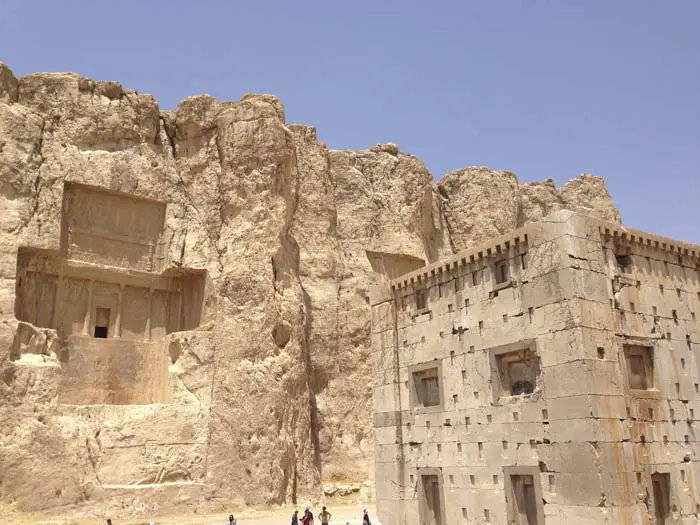
© MAITE ELORZA - Tomb of Xerxes and descendants
Ahura Mazda
Xerxes I worshiped Ahura Mazda, a deity from the Zoroastrian religion. Extant records do not state that Xerxes I was a Zoroastrian but they do say he worshiped Ahura Mazda. Many of his inscriptions mention what he had done or things he had built in Ahura Mazda’s name. During the Achaemenid Period, no images were made of Ahura Mazda. Instead, the kings brought an empty chariot drawn by white horses when they went into battle. They believed this encouraged Ahura Mazda to travel with the army and grant them victory.
Facts
- Xerxes I invaded Greece with a huge army and navy but a much smaller force defeated him.
- His reign marked the beginning of the end of Persia’s imperial power.
- Xerxes I worshiped Ahura Mazda.
- The historical and modern view of King Xerxes is skewed because of the bias of ancient Greek historians.