
 Ancient Egypt Home
Pharaohs
Egyptian Gods
Egyptian Pyramids
Hieroglyphics
Temples
Life in Ancient Egypt
Maps of Ancient Egypt
History of Egypt
The Queens of Egypt
Mummies
Religion
Cities and Regions
Ancient Egypt Facts
Ancient Egypt For Kids
Ancient Egypt Home
Pharaohs
Egyptian Gods
Egyptian Pyramids
Hieroglyphics
Temples
Life in Ancient Egypt
Maps of Ancient Egypt
History of Egypt
The Queens of Egypt
Mummies
Religion
Cities and Regions
Ancient Egypt Facts
Ancient Egypt For KidsFashion in Ancient Egypt
Ancient Egyptian fashion consisted of clothes adorned with a variety of colors and precious gems and jewels. While fashion in Ancient Egypt was primarily constructed for the purpose of comfort, this did not mean that ancient Egyptians felt they should sacrifice beauty for comfort.
Scholars of ancient Egypt get most of their knowledge of Egyptian fashion from statues and wall paintings, although some examples of clothing were found in tombs and houses. Tombs also held make-up kits and perfume containers, with caches of jewelry dating to different time periods.
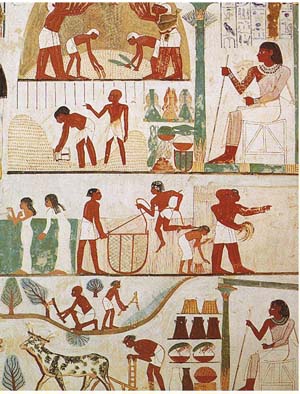
Egyptians wearing various types of clothing
The Egyptians used linen to make most of their clothing, a light and cool material, perfect for a hot climate. White was the most common choice of color, but they also used red, blue and yellow. Clothing was worn draped over the body and was either tied or sewn in a few places. Other items, made of wool, have been found more rarely, since tombs did not shelter objects made from animal products.
Sandals were the usual foot cover in ancient Egypt, made from plant fibers or leather. Scholars also found a fur-lined boot in one ancient house.
The Egyptians believed in cleanliness and felt that hair could make a person less clean. Most men shaved their faces and priests had to shave their entire bodies. Wealthy men and women often shaved their heads and wore wigs made of human hair, sometimes mixed with plant fiber.
The pharonic headdress quite commonly seen in depictions of Egyptian kings was just one of the many headdresses common to ancient Egyptian fashions. The various gods of Egyptian mythology all also had their own headdresses and women also commonly styled their hair in elaborate fashions and donned headdresses; although not of such an elaborate style.
Ancient Egyptian Jewelry
Jewelry was extremely popular throughout the history of the Egyptian nation. Excavations of tombs have shown that queens of Egypt were almost always buried with a multitude of jewelry to be used in the afterlife.
All classes in the Egyptian society wore jewelry. A popular type of jewelry was the amulet, believed to protect the wearer. Amulets were often made in the form of sacred symbols, like the Eye of Horus or the ankh.
Both sexes wore jeweled collars made of strings of beads, as well as armbands, bracelets and anklets. Finger rings often had seals on them. Beginning in the New Kingdom, some Egyptians pierced their ears and wore earrings.
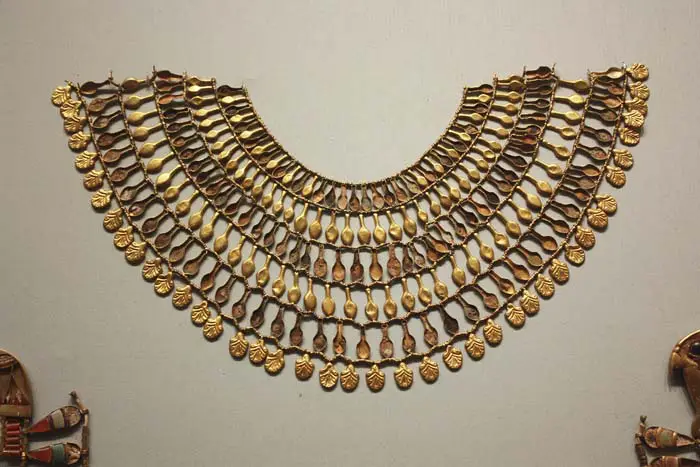
© Peter Roan - Broad Collar from the 18th Dynasty
The amount of jewelry worn by an individual often indicated their social position and level of wealth. Even the poor, who could not afford much, attempted to adorn themselves with as much jewelry as was possible. While not nearly as expensive, the jewelry of the commoner was usually very brightly colored and was constructed of materials such as pottery.
In the making of jewelry, gold was the most popular metal, as it stayed shiny and was easy to mine and work. From the various semi-precious stones used, one of the most commonly used was lapis lazuli.
Other inexpensive materials were made to resemble semi-precious stones. Colored cement, for example, was covered with transparent quartz to make stones that looked like lapis lazuli. Beginning in the New Kingdom, jewelers made objects of colored glass. The goal of Egyptian jewelers was to make colorful objects, not items that could reflect light.
Scarabs
Scarabs were very popular in Ancient Egypt, mostly due to their religious significance. The scarab beetle of the Scarabaeidae family was worshipped as a symbol of rebirth, of cyclicity of time. This held such importance in the ancient Egyptian culture that the god Khepri (god of rebirth and embodiment of Ra as the rising sun) was depicted either as a scarab beetle, or with a scarab beetle for his head.
It is, therefore, easy to understand why scarabs were often worn as amulets or incorporated in other types of jewelry. They were also carved into seals (either personal or administrative), crafted as commemorative pieces or even buried with the dead for protection in the afterlife. The latter use was often paired with spells, and the scarabs were placed on the chest of the deceased along with a pair of wings.
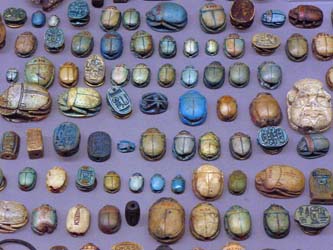
© ryanophilly - Scarabs
Ancient Make-up
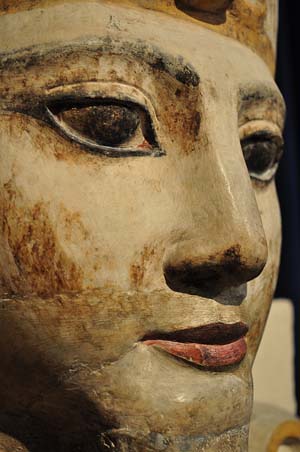
© Peter Miller - Ancient Egyptian Make-Up
Make-up kits found in tombs were stored in chests and included bronze or copper mirrors, small jars of make-up or ointments and a variety of applicators the Egyptians used.
Both men and women in Ancient Egypt wore make-up. It protected their skin from the damaging effects of the desert climate. Cosmetic makers used red ochre to make rouge, and they mixed it with ointment to make lip balm. Malachite was used for green and galena for dark gray paint.
Egyptians used perfume as a deodorant. They wore cones of perfume on their heads at feasts. When the cones melted, they released fragrances into the air.
Eyeliner
The black eyeliner is one of the most recognizable elements of fashion in ancient Egypt. Although appealing to the modern world due to contemporary trends, this type of eye make-up was more than a fashion statement. Egyptians used Kohl, a black substance that served as protection against the glare of the sun. Some theories speculate it was also used for protection against the 'evil eye'.
Women's Fashion
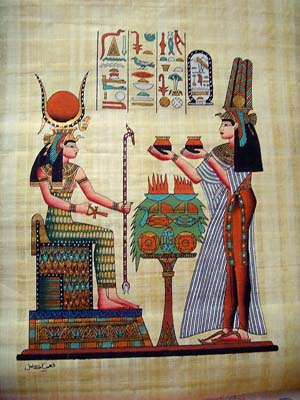
Women of all classes wore ankle-length sheath dresses made of linen. Peasant women wore plain linen dresses and some statues show servant girls wearing dresses made of colored fabrics sewn in a checkered pattern.
Upper-class women wore pleated dresses with fringes, sometimes covered with a transparent garment. Formal clothing was often more elaborate and the later periods brought Greek or Roman fashions.
Men's Fashion
Poor Egyptian men often only wore a loin cloth while working. Upper-class men wore knee-length kilts, made of a rectangular piece of linen, with pleats or a stiffened front. They wrapped the kilts around their bodies and either tied them or used something to fasten them in place. Sometimes, men wore cloaks during cool weather.
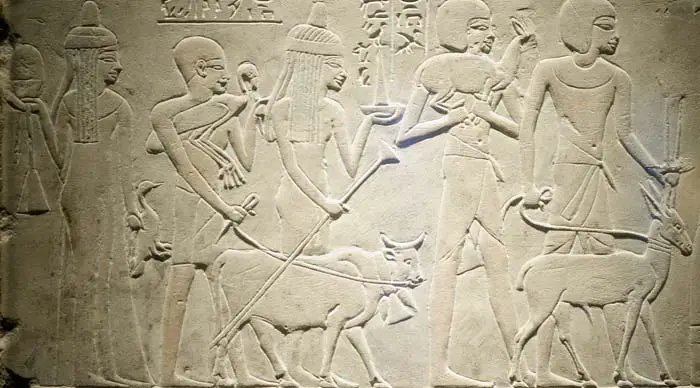
© rob koopman - Relief in the tomb of Merymery
Children's Fashion
Images show that poor children wore no clothing until they hit puberty. Wealthy children wore similar clothing to their parents'. Egyptians shaved their children's heads, except for a long section of hair called a youth lock. Children also wore makeup, including kohl (grinded stibnite).
Ancient Egypt Fashion Facts
- All Egyptians wore clothing made from linen.
- Both sexes used makeup as beauty aids and to protect their skin.
- Women wore ankle-length, sheath dresses.
- Men wore kilts or loin cloths.
- All Egyptian classes wore jewelry.
- Some items of jewelry were amulets designed to protect the wearer.
- Wealthy children wore clothing and makeup like their parents.
- Jewelers made some jewelry of colored glass.